

By increasing engineering capacity, African countries can accelerate the achievement of development goals as outlined by UNESCO in its report, "Engineering for Sustainable Development" (2021), and by the World Bank in its report, "Science, Technology, and Skills for Africa's Development" (2014).
African universities, including the University of Ibadan (UI) and the University of Lagos (UNILAG) in Nigeria, are transforming engineering education to grow engineering capacity across Africa. UI and UNILAG have been expanding their science, engineering, and technical curricula to incorporate hands-on, practical, and active learning, as well as design-based learning and Invention Education (IvE) methodologies. These efforts aim to improve student understanding and retention of engineering concepts, broaden their practical skills and prepare students for roles as decision makers, innovators, and entrepreneurs.
Hubs for Project-Based Learning
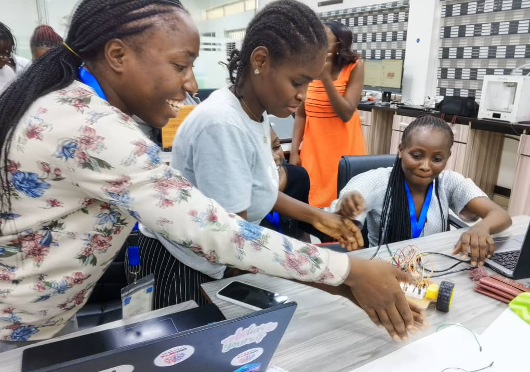
To provide students with the benefits of IvE education, Nigeria's leading universities, UI and UNILAG, established dedicated Design Studios in 2021. The studios serve as maker spaces and engineering learning hubs, offering hands-on, practical skills training. Students and the community can attend workshops at these studios and learn computer programming, electronics assembly, and robotics. They also provide soft skills development in leadership, networking, teamwork, and presentation skills and classes on intellectual property, and entrepreneurship.
I love how the studio makes complex concepts easy to understand — we don’t just learn CAD or Python; we actually build and design things that matter.
- Issac Peace (UI Design Studio), 300 Level Mechanical Engineering, University of Ibadan
The [Invention Education] initiative was incredibly valuable, and I gained a lot from the sessions on 2D and 3D software, business, and entrepreneurship skills, as well as the coaching. Although I haven't yet actively applied the software skills in real-world projects, the program has helped me become more confident and knowledgeable about using design software. The business sessions have been particularly useful in managing my existing business more effectively.
- Lateefat Adetoun Bankol (UNILAG Design Studio), 400 Level (Final Year) French Language, Department of European Language, University of Lagos
Expanding Engineering Know-How for Women & Girls
As part of the Design Studios' outreach efforts, they offer programs specifically designed for women and girls. Educating these talented young women in STEM aims to drive local innovation while increasing the pool of competitive engineering talent within Nigeria.
For the last three years, girls and young women participating in these popular programs at UI and UNILAG have been learning to design solutions, innovate, and harness their creative and intellectual strengths in pursuit of engineering careers. The programs are a source of pride at UI and UNILAG, with over 250 graduates so far.
Local industry and large corporations, such as Chevron, have taken notice. Chevron supports these efforts to promote STEM learning for girls and women in Nigeria through grants and mentorship of students. The programs align with their efforts to develop a local workforce for engineering projects in Nigeria and beyond.
The UI and UNILAG Invention Education outreach for women and girls includes several different programs for various ages and cohorts. These programs inspire young women and girls to become the next generation of innovators. They include:
The Ladies in Tech (LIT). This program at the University of Lagos (UNILAG) has become a beacon of innovation and empowerment for young women in Nigeria’s tech ecosystem. Across Cohorts 1 and 2, the program equipped 60 participants with hands-on training in electronics, 2D and 3D design, laser cutting, and entrepreneurship. These women, drawn from diverse academic backgrounds, developed impactful projects including wearable personal safety devices, smart home organizers, mobility aids for urban navigation, and retail platforms for local vendors. Supported by Chevron and Rice360, LIT has not only bridged the gender gap in STEM but also laid the groundwork for scalable, gender-inclusive innovation across Nigeria.
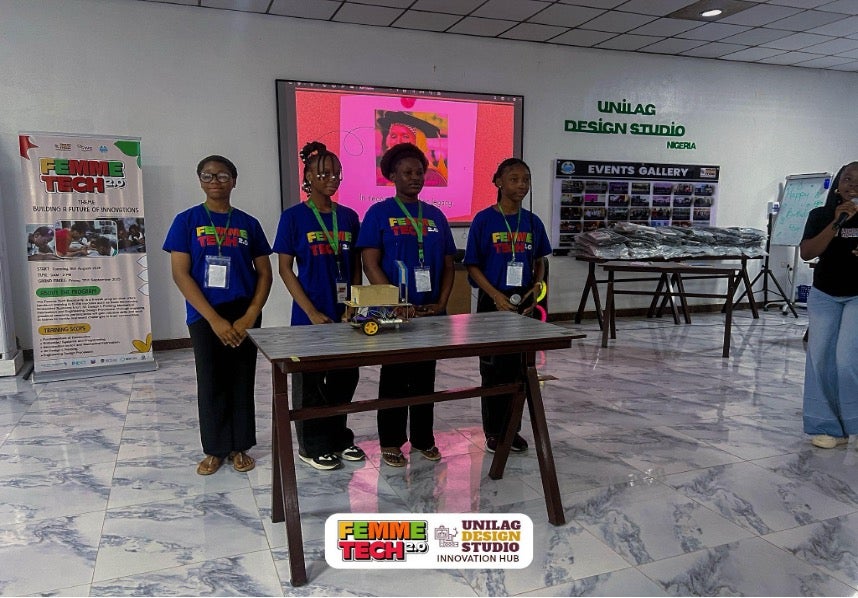
UNILAG Girls in Tech. The Girls in Tech initiative at the University of Lagos (UNILAG), known as Femme Tech, has completed two cohorts, engaging both public and private four secondary schools across Lagos, Nigeria. Through a combination of summer bootcamps and sessional engagements, the program has reached a total of 70 teenage girls, equipping them with practical technology skills and fostering early interest in STEM careers. Organized by the UNILAG Design Studio in collaboration with the Society of Women Engineers (SWE), Chevron, Rice360, and NEST360, the bootcamps introduced participants to hands-on learning in electronics, 3D design, and Internet of Things (IoT) systems using Arduino. Femme Tech 2.0, co-funded by the African Engineering and Technology (AFRETEC) Network, culminated in a grand finale featuring team presentations and prototype demonstrations under the theme “Building a Future of Innovations.” These efforts collectively promote technical proficiency, creativity, and collaboration, laying the foundation for a new generation of confident, capable female innovators in Nigeria.
After learning 3D design during the [Ladies in Tech] programme, I was able to model a simple desk organizer using Fusion 360 based on an idea I had. It felt amazing to take a concept from my mind and turn it into a 3D design. I’ve also started practicing 2D designs more intentionally, applying what I've learned to personal projects and even helping others visualize their ideas better. The programme gave me the confidence to start creating, not just consuming.
- Adeyemi Oluwalana Dorcas, Department of Computer Science (UNILAG)
UNILAG Femme Tech Club. In the UNILAG Femme Tech Club, students from the junior school at the International School of the University of Lagos participate in a three-month program that meets at the UNILAG Design Studio twice a month to learn basic electronics, develop an Internet of Things network using Arduino, and explore 3D design and printing. The students apply their learning to design projects, presenting their final prototypes at the end of the session. Keynote speakers from the community engage participants with seminars highlighting the roles of engineers and innovators in the community.
Female Pre-teen TECH Bootcamp. UI programs include the Female Pre-teen TECH Bootcamp, which promotes STEM learning for girls aged 10-12 from three schools located on the UI campus. The program is dedicated to unlocking the potential of girls in technology fields and introduces them to the basics of programming, robotics, and engineering. The students create their own projects using the Design Studio resources and are encouraged to experiment with their designs to develop unique solutions. Guest speakers introduce them to STEM careers and examples of successful designs.
UI Ignite Tech in Girls (ITiG). The UI Ignite Tech in Girls (ITiG) includes 20 participants between the ages of 18 and 21 years. At this 5-day design bootcamp, the young women learn about data cleaning, data analysis and visualization, 3D printing, and embedded systems. Projects apply the learnings and are presented by the students at the end of the session. The program introduces STEM concepts and fosters interest in STEM careers among the participants while developing teamwork and networking with mentors.

Support for Faculty Implementation of Invention Education (IvE)
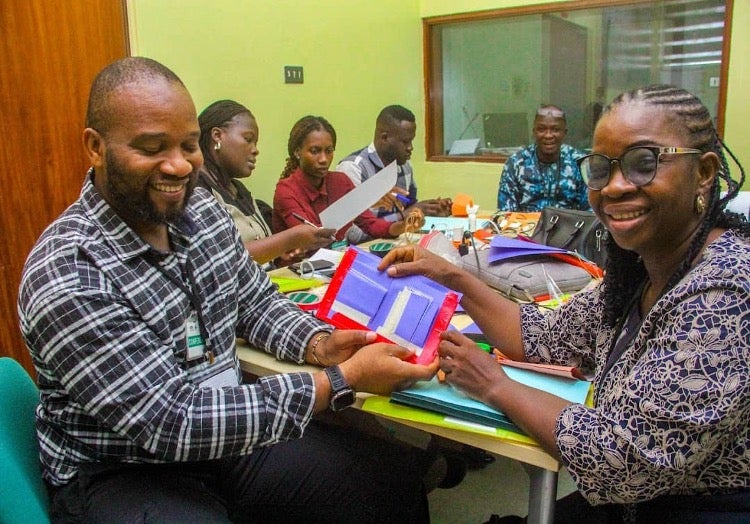
In addition to students, the studios at UI and UNILAG work with the faculty to adapt their curricula and incorporate project-based learning. The studios serve as a nexus for faculty interested in implementing these effective learning methodologies.
The studio has become a cornerstone of our practical engineering education. It aligns perfectly with our vision of producing graduates who are innovative, industry-ready, and capable of leading future technological advancements.
-Dr. Adeleye, Biomedical Engineering Department (UI)
Attending the design studio faculty development workshop greatly enhanced my teaching, especially for undergraduate courses like Software Engineering. Previously, the course was mostly abstract lectures, but after learning about active and project-based learning, I restructured it to include hands-on projects. Students were divided into teams with roles such as project manager, front-end developer, back-end developer, database programmer, and UI/UX designer, using Notion for project management. They worked on diverse topics related to food, energy, and water systems, developing game apps, web apps, and mobile apps. The approach improved teamwork, collaboration, and exposure to different development stacks. Feedback was excellent—one student called it her best course of the semester. Overall, student performance and engagement were highly encouraging and impressive.
- Dr. Omolola Ogbolumani, Department of Electrical and Electronics Engineering (UNILAG)
Growing the Engineering Workforce in Africa
These programs at UI and UNILAG support efforts by African governments to educate a growing workforce of qualified engineers. The professionals are poised to accelerate economic growth through improving infrastructure & transportation, broadening access to clean water & efficient renewable energy, establishing effective natural disaster response & healthcare technologies, and enhancing agricultural sustainability across their communities. The spark of innovation from UI and UNILAG Design Studios has the power to accelerate Nigeria's engineering breakthroughs of the future.