
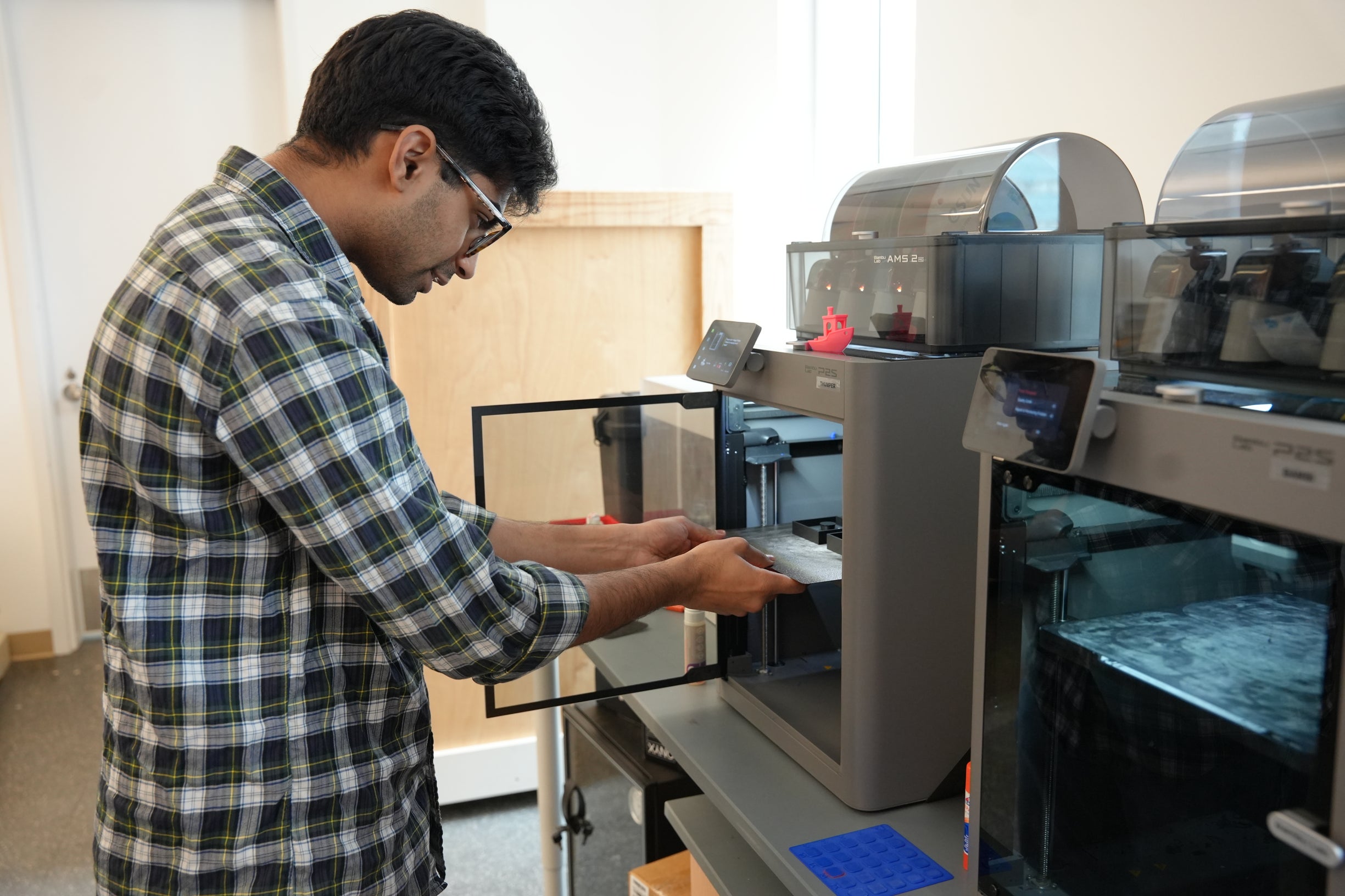
By Alek Mishra (pictured above in the Rice360 lab)
Alek Mishra became interested in global health in 2023 after participating in a summer research program through the Duke Global Health Institute, investigating mental health outcomes of orphaned and separated children at UdayanCare, an Indian childcare institution. After graduating from Duke University with a degree in Biomedical Engineering, Alek was accepted to the Rice360 Global Health Fellowship, where he has been working to advance the development of LUCIA, a low-cost, universal cervical cancer instructional apparatus used worldwide to teach cervical cancer screening techniques. Below, he shares experiences and inspiring updates from his fellowship.
Fellowship project: LUCIA
Cervical cancer is largely preventable with the HPV vaccine and regular screening, but it remains one of the leading preventable causes of death for women worldwide. In 2022, according to the WHO, around 350,000 women died from cervical cancer, with 94% of these deaths occurring in areas of the world where clinical training for early detection and treatment of cervical cancer is limited.
LUCIA (Low-cost, Universal Cervical Cancer Instructional Apparatus) was designed as an affordable, portable training model suitable to train healthcare workers on screening and treatment procedures for women.
LUCIA supports training in several cervical cancer screening and treatment procedures, including visual inspection, biopsy techniques, LEEP (Loop Electrosurgical Excision Procedure), and thermal ablation. Since 2018, LUCIAs have been used to train healthcare workers worldwide.
As part of its ongoing work, Rice360 evaluates LUCIA through user feedback to improve the anatomical accuracy and its efficacy as an educational tool. When I joined Rice360 as a global health fellow, I was assigned to the LUCIA team to implement improvements.
Project Milestones: Overcoming Production Bottlenecks
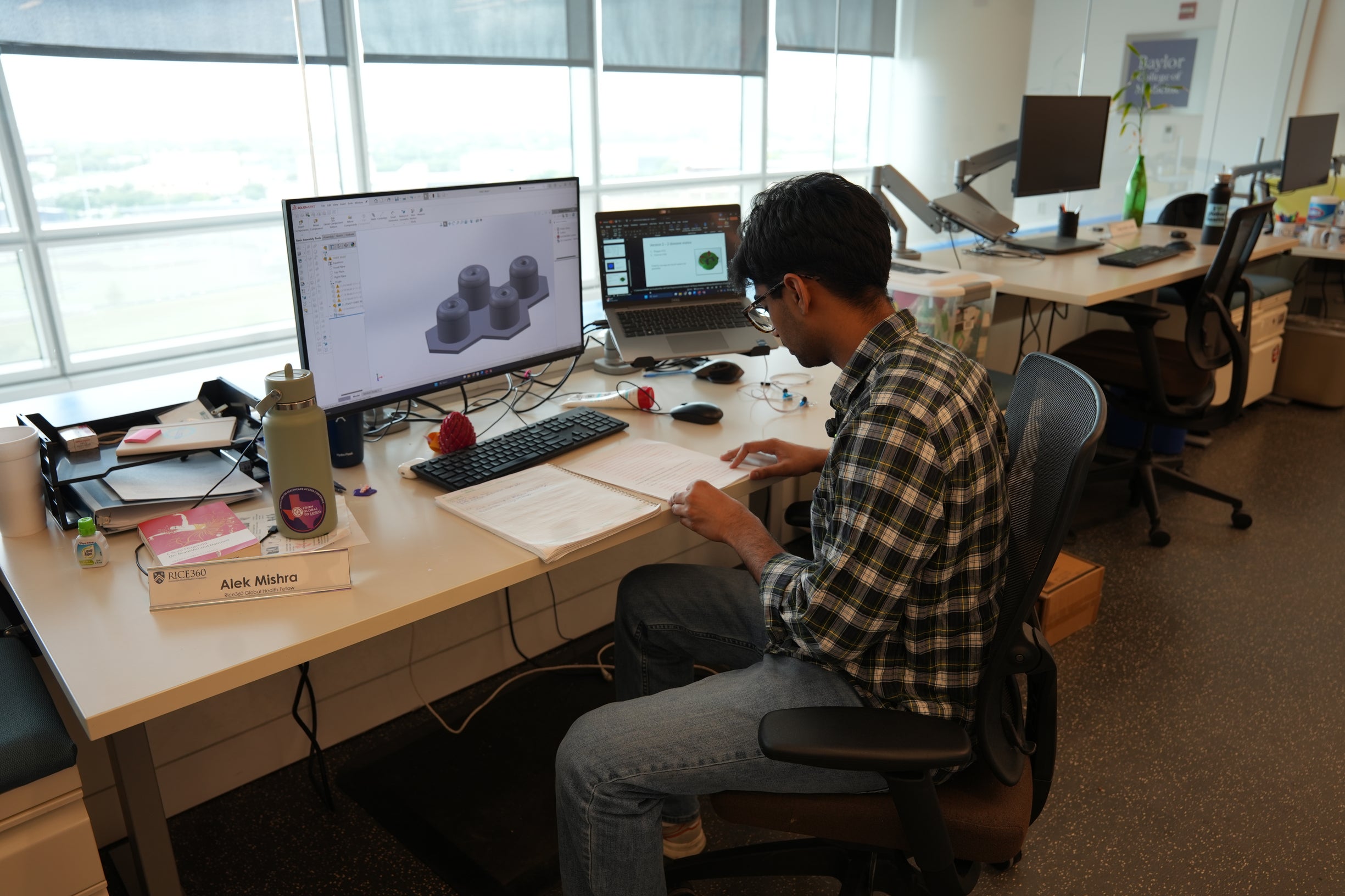
One of my first projects as a Rice360 fellow was to tackle LUCIA’s biggest production bottleneck—producing the 20 plastic model cervix components used to practice visual inspection. Rice360 has faced a recent increase in demand for the LUCIA kits, and the bottleneck around producing the cervix components slows the distribution. These cervixes model different stages of cervical cancer from precancerous lesions to late-stage cancer to train clinicians in visual identification. Previously, the cervix models were 3D-printed and then painted to mimic the appearance of a real cervix. Printing the plastic models was expensive and took a lot of time, costing $40 per set of 20 cervixes and taking over 40 hours to print.
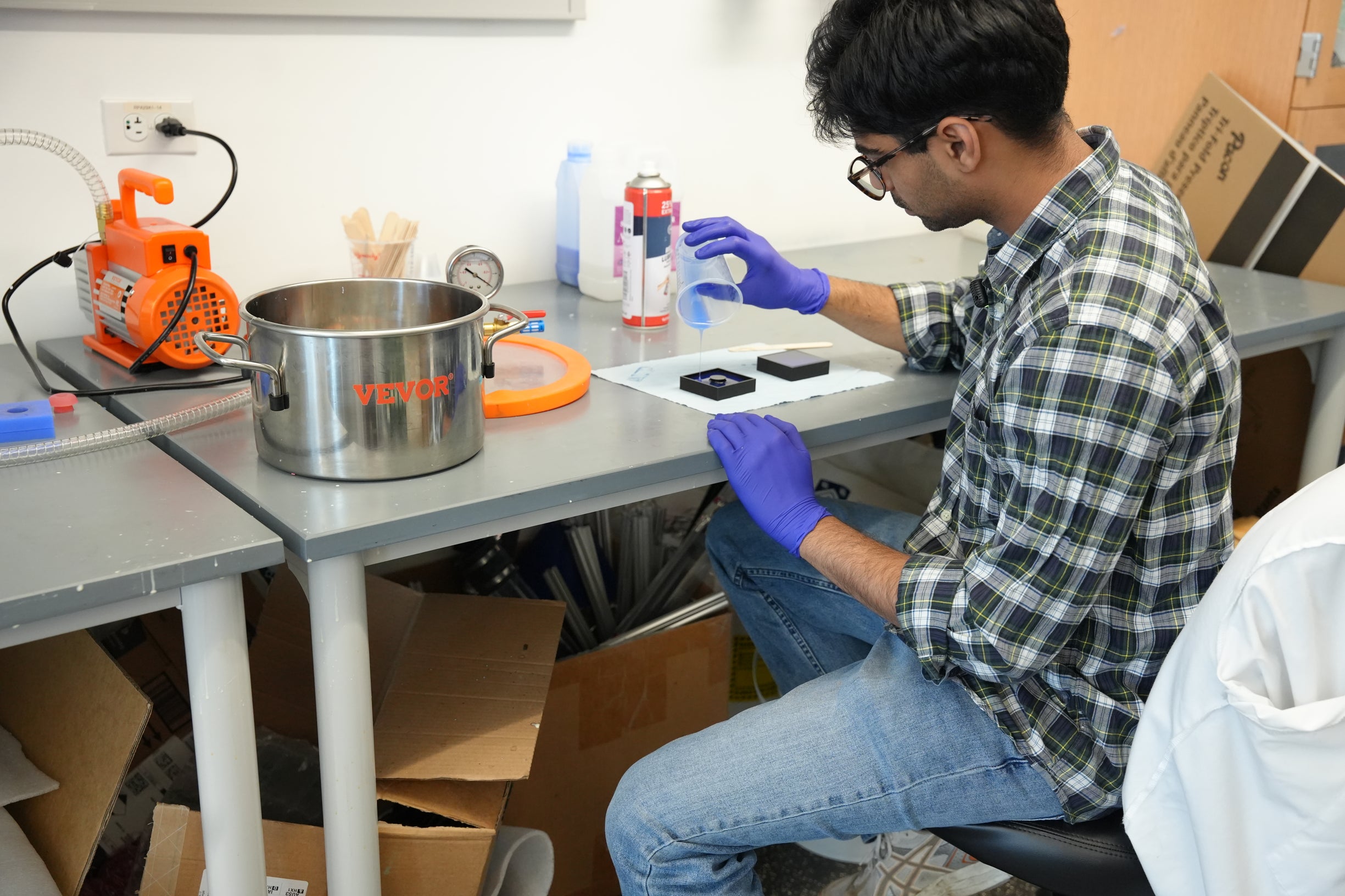
I explored different production methods and landed on casting as the most effective one. To do this, I designed a 3D-printed positive of each cervix mold that would be cast in silicone to make a two-part negative mold. These silicone negative molds were then filled with urethane resin to cast each set of 20 cervixes. I also optimized the shape of the cervixes to be “casting-friendly,” which included adding drafts to the cervixes so they could be demolded easily. This reduced the amount of material for each cervix and thus brought down the total cost per cervix set from $40 to $6.31. Furthermore, the production time was reduced from 40 hours to 1 hour per set (the time it takes for urethane to cure). Using the casting method, we produced enough cervixes in about 1 month for our next batch of 100 LUCIAs, eliminating this major production bottleneck.
Learnings from Malawi
Our relationship with our partners in Blantyre, Malawi, has been a crucial part of the LUCIA partnership. While fellows have worked on making design changes to the LUCIA in Houston, our team in Malawi has been responsible for leading manufacturing efforts since the project began. After I finished casting the new batch of cervix models, I had the chance to travel to Malawi in February 2026 to deliver them to the team that paints them. I also brought materials for the LUCIA that are hard to find in Malawi, such as the water-resistant fabric for the labial panel and vaginal canal.
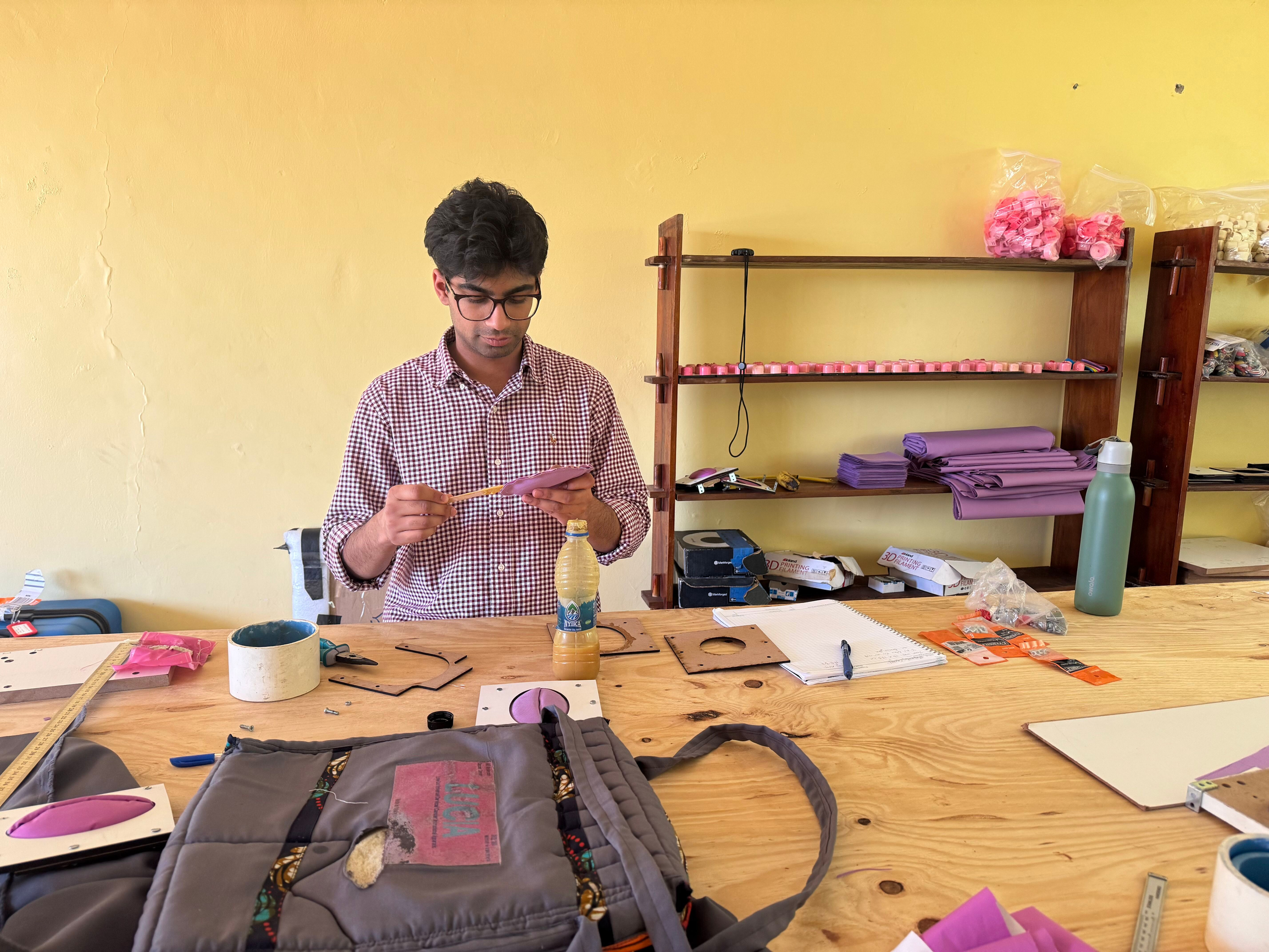
My most important task in Malawi, aside from delivering the cervix models, was to learn more about the production stages of the LUCIAs. I joined our team in Malawi to manufacture a prototype for the current batch of LUCIAs, document the process to guide future fellows, and identify additional areas for improvement. I also met with the craftspeople who produce the device's supporting components, such as the embroiderer who makes the LUCIA bags and the tailor who hand-assembles the fabric component of the labial panel. After working alone on the cervix model casting project, it was great to meet the team involved with LUCIA and experience the effort and care that go into making each device. I felt honored to be part of this hard-working team of collaborators in Malawi.
Looking ahead, one of my next goals is to improve upon the LUCIA’s cervical biopsy model. The existing model is a cervix made with ballistic collagen gel that can be biopsied with Tischler Forceps. While they are low-cost at only 30¢ per cervix, they must be made the night before the training by users and tend to dry out or grow mold if not stored properly. To address this issue of shelf stability, I have been investigating silicone as an alternative. I hope that future iterations of this concept will be incorporated into the LUCIA kit to improve accessibility of the biopsy models in low-resource settings.
Fellowship Opportunities
I have learned many new skills from my time as a fellow. For one, while I had prior experience with computer-aided design (CAD) in college, I became much more proficient with it through designing the cervix molds for LUCIA. Additionally, I became well-versed in molding and casting techniques, understanding when to use various types of equipment at different stages of the manufacturing process to improve the quality of the cervix models.
My documentation skills have also greatly improved. I have learned how to effectively break down a technical process into steps so that someone can replicate it. I’ve developed a newfound respect for how effective documentation can be in improving communication within teams and the success of a project.
Rice360 Global Health Fellowship Impact
This fellowship has allowed me to bridge my passions for engineering, global health, and medicine in ways I never imagined. It has sharpened my technical skills while teaching me how to innovate with an eye toward sustainability and global impact. I also appreciated the opportunity to see a project through various stages of development—from design, to manufacturing, and even analyzing the implementation. I hope to continue innovating for low-resource environments, specifically exploring screen-and-treat technologies to improve community health outcomes and address health inequities in my future career.
Interested in becoming a Rice360 Global Health Fellow? Apply today!