
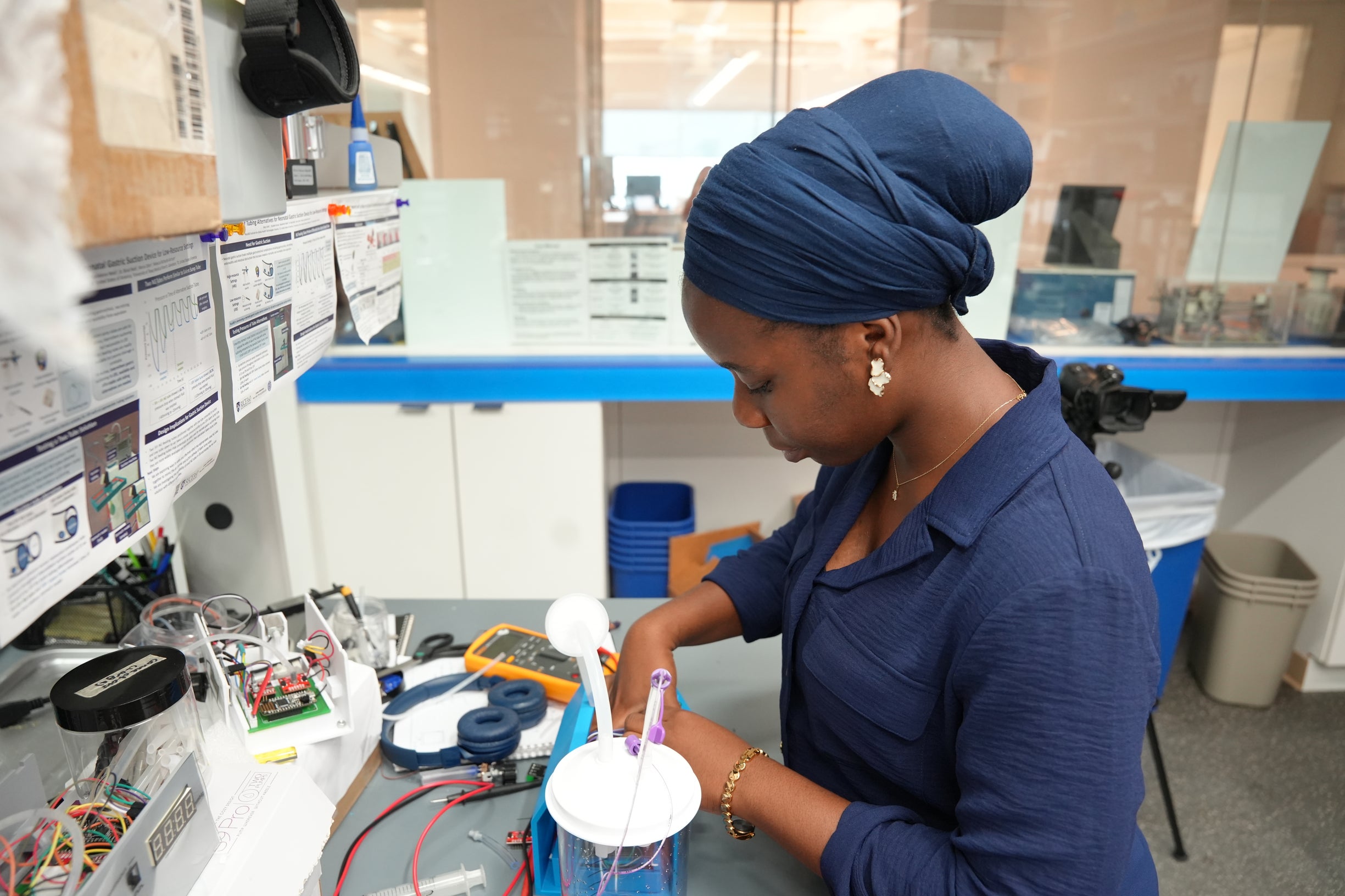
By Yusirat Damilola Alimi (pictured above in the Rice360 lab)
Yusirat graduated from the University of Ibadan in Nigeria with a First Class degree in Mechanical Engineering. While studying at the University of Ibadan, she worked on the design and development of an Automatic Syringe Infusion Pump. The project aimed to address the lack of access to syringe infusion pumps in many low-resource hospitals, where the pumps are critical in the precise administration of anesthetic agents, sedatives, analgesics, and vasoactive drugs.
Yusirat also served as a student research intern at the University of Ibadan Design Studio, where she gained hands-on skills in 3D printing, hardware prototyping, Autodesk Fusion 360, Python, and prototype development. She contributed to projects, including a portable biosensor to assess the impact of air pollution on respiratory health.
She has volunteered to teach programming languages in student clubs, organized technology and engineering conferences in Nigeria, and, most recently, worked in the technology industry as a software engineer, building digital health and technology solutions for startups in Nigeria, Canada, and Estonia. She holds a mini-MBA from the Lagos Business School, the graduate business school of Pan-Atlantic University.
Rice360 Global Health Fellowship Project: Low-cost Neonatal Gastric Suction System
During my time at Rice360 as a Global Health Fellow, I am working on a low-cost neonatal gastric suction system for low-resource settings. Gastric suction is a medical treatment required for newborns suffering from gastrointestinal conditions that, when left untreated, cause complications like aspiration pneumonia and unnecessary death. The gold standard technology is too expensive for low-resources settings, and improved solutions pose an increased risk of aspiration (accidentally breathing foreign material into the lungs) and a high burden on caregivers. Thus, there is a need for a gastric suction system appropriate for low-resource settings that is safe, effective, sustainable, and affordable.
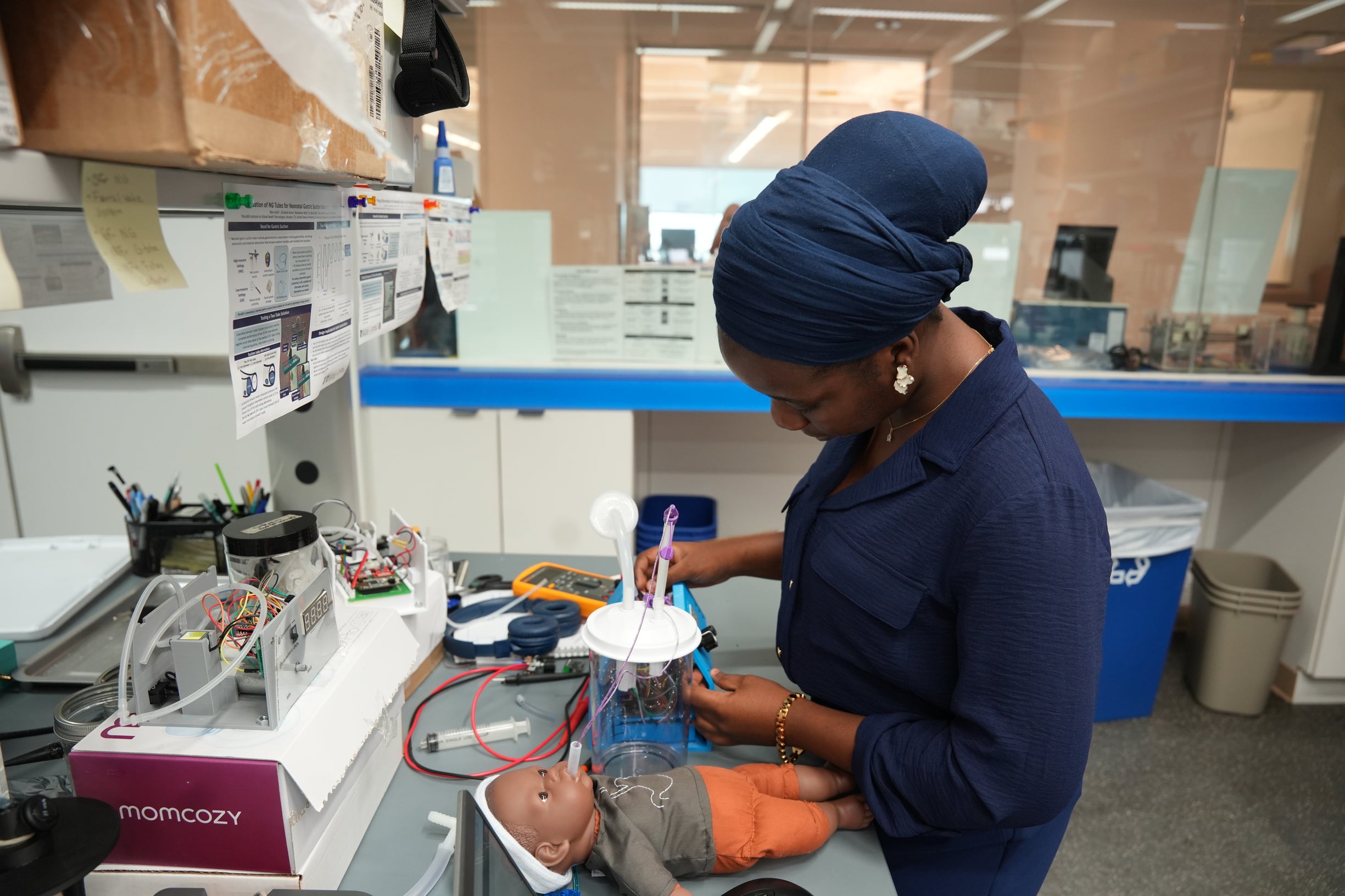
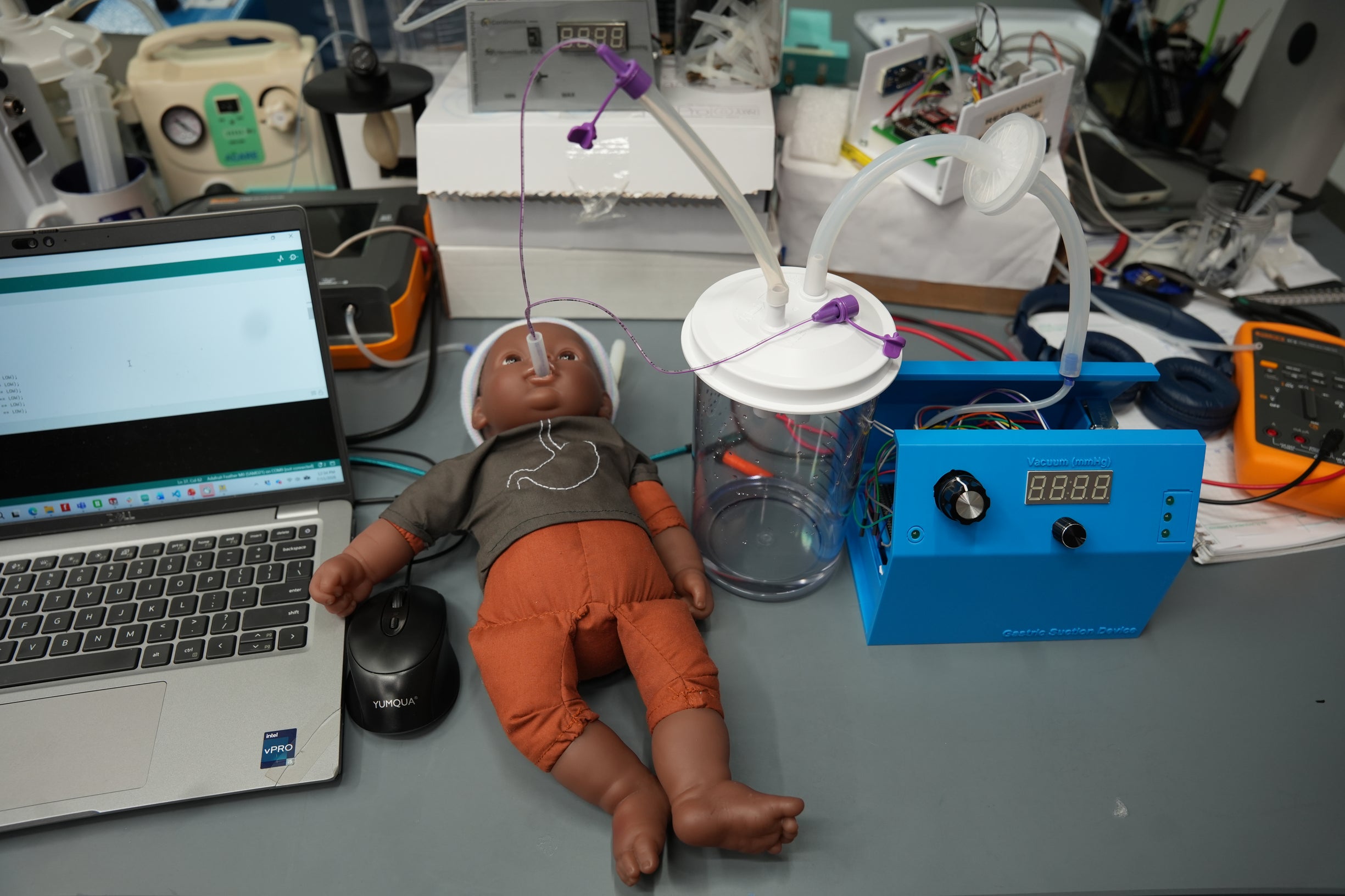
The low-cost system I am developing has two connected parts: tubing and a portable suction device. For the tubing component, I am working to identify accessible alternatives to neonatal Salem Sump tubes, the industry standard, which cost $13 per tube, which can be a prohibitive expense for many hospitals in low-resource settings. The low-cost tubing system consists of two NG (nasogastric tubes) tied together with surgical suture thread, which are materials commonly available in hospitals in low-resource settings.
Together with physicians in the United States and the Dominican Republic, Rice360 has developed IRB protocols for a pilot feasibility studies to determine whether the tubing system we have developed is clinically feasible. One protocol has been submitted and is currently under IRB review. We plan to conduct clinical studies at two locations in the fall.
Another important milestone has been the improvement of the portable suction device prototype. The updated prototype features consistent suction pressure, expanded pressure adjustment capabilities, and incorporates clinician feedback. The updated prototype is currently undergoing benchtop testing, where we hope to generate statistically significant results to support its use for a usability study soon.
Project Goals: Feasibility and Testing
The overarching goal is to see the Low-cost Neonatal Gastric Suction System successfully used by healthcare facilities to treat newborns suffering from gastrointestinal conditions in low-resource settings. For the tubing, the next important step is to complete the pilot feasibility study and use clinical feedback to assess how well the alternative tubing performs in real-world neonatal care settings.
After fully optimizing the portable suction device and ensuring it passes benchtop tests, the next step will be to conduct usability testing with the device and the low-cost tubing alternative. The next stages of the project will continue to focus on whether it is easy to use, reliable, affordable, and appropriate for the hospitals and clinics where it is needed.
The tubing and portable suction device under development address two sides of the same problem, so both components will work together to expand access to safe neonatal gastric suction. I hope this work can eventually contribute to better care for newborns and support clinicians who are working in hospitals with limited resources.
Global Health Fellowship Experience
My experience as a Rice360 Global Health Fellow has been fulfilling, challenging, and eye-opening. I have always been very passionate about building healthcare solutions for low-resource settings like Nigeria, where I am from. Before this fellowship, many of my ideas and projects had ended at the prototype stage. This experience has shown me what it really takes to move a technology beyond an idea or prototype toward clinical evaluation, commercialization, and eventual use in healthcare settings.
The fellowship has shaped my approach to problem-solving. I have learned a whole lot about the design process, how to ask the right questions, and have come to realize how much engineering also depends on asking for and receiving feedback. Conversations with clinicians and feedback from the meetings have given me a different perspective on how I approach every aspect of my project. I have come to value more the importance of testing through multiple iterations, paying attention to what the results say, identifying what still needs improvement, and considering what evidence is needed for the next step.
Not every test gives me the result I expect, but each one helps me understand the problem better and reminds me why I care about global health technology and would like to continue working in this field. I have also really valued the community around the fellowship, from working with my colleagues to volunteering for activities like coaching teams at the Rice360 Undergraduate Global Health Technologies Design Competition, attending conferences, networking opportunities, and leading tours where I get to talk about the work I am doing. The fellowship has helped me grow professionally and impacted me in many ways I haven’t fully uncovered yet.
I have found really amazing communities and met a lot of amazing people. I have attended and volunteered for some events organized by the Rice University African Graduate Students Association. I enjoy going to Hermann Park to take walks and see some shows at the Miller Outdoor Theatre, and I have also visited the Museum of Fine Arts and the Museum of Natural Science.
Growth Opportunities
While I have acquired many new skills, I have also improved many of my existing ones. I have become better at communicating and presenting my work, explaining technical progress clearly and straightforwardly, and talking through design decisions with the stakeholders involved in the project. My networking skills have improved a great deal!
I have also had to grow in leadership, planning, and project management, and in taking ownership of my entire project. I am learning how important it is to keep everyone updated and make decisions based on the data and evidence.
On the technical side, I have continued to improve my CAD, 3D printing, and hardware prototyping skills. I have also used Python at different levels to clean and organize large datasets from testing and to use JMP to plot clearer graphs that make the results easier to understand and present. I have also acquired new technical skills important to medical device development, such as PCB design, drafting IRB protocols, and developing an Engineering design trace matrix. It has been exciting to grow in my skill sets
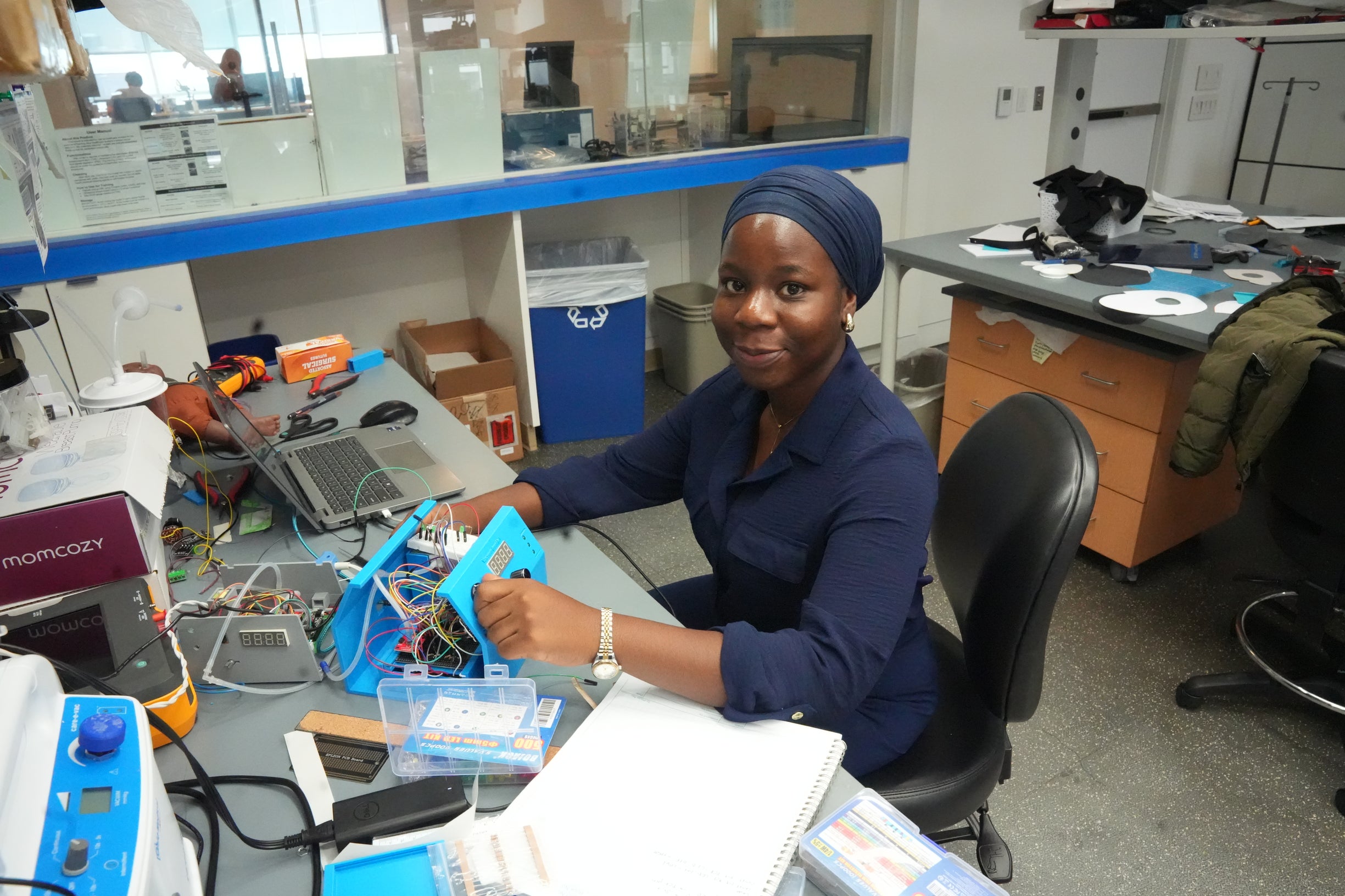
Interested in becoming a Rice360 Global Health Fellow? Apply today!