
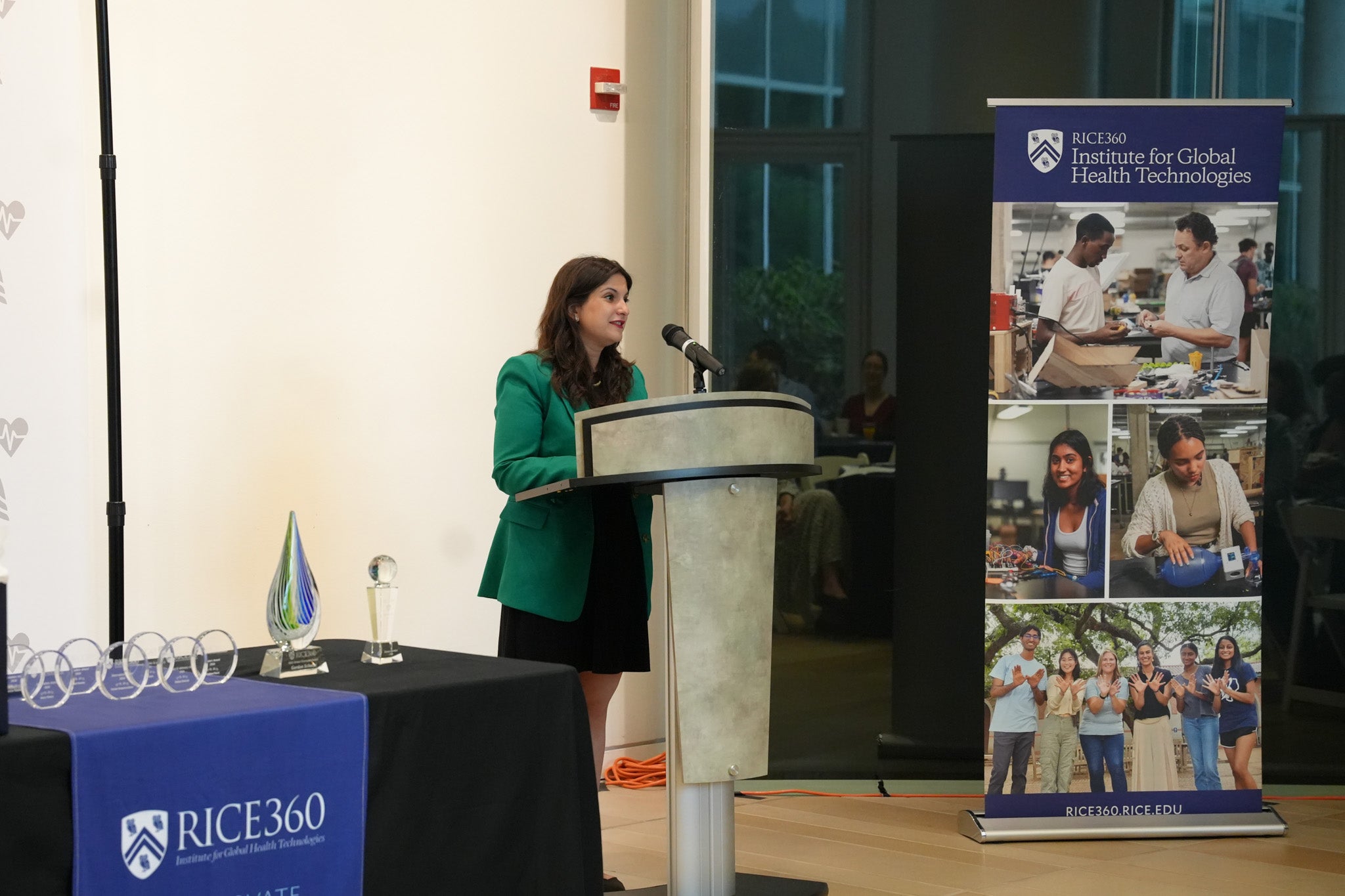
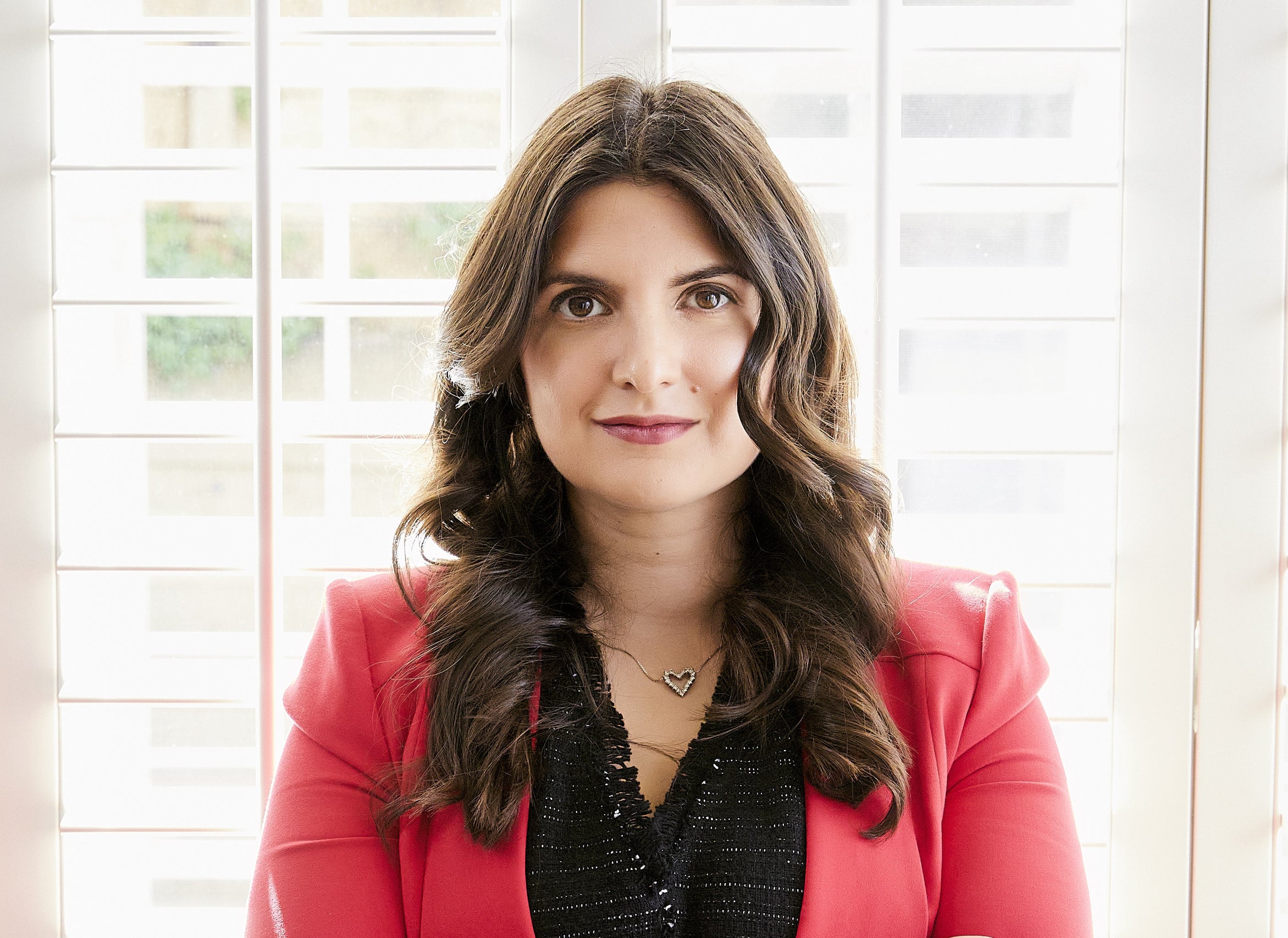
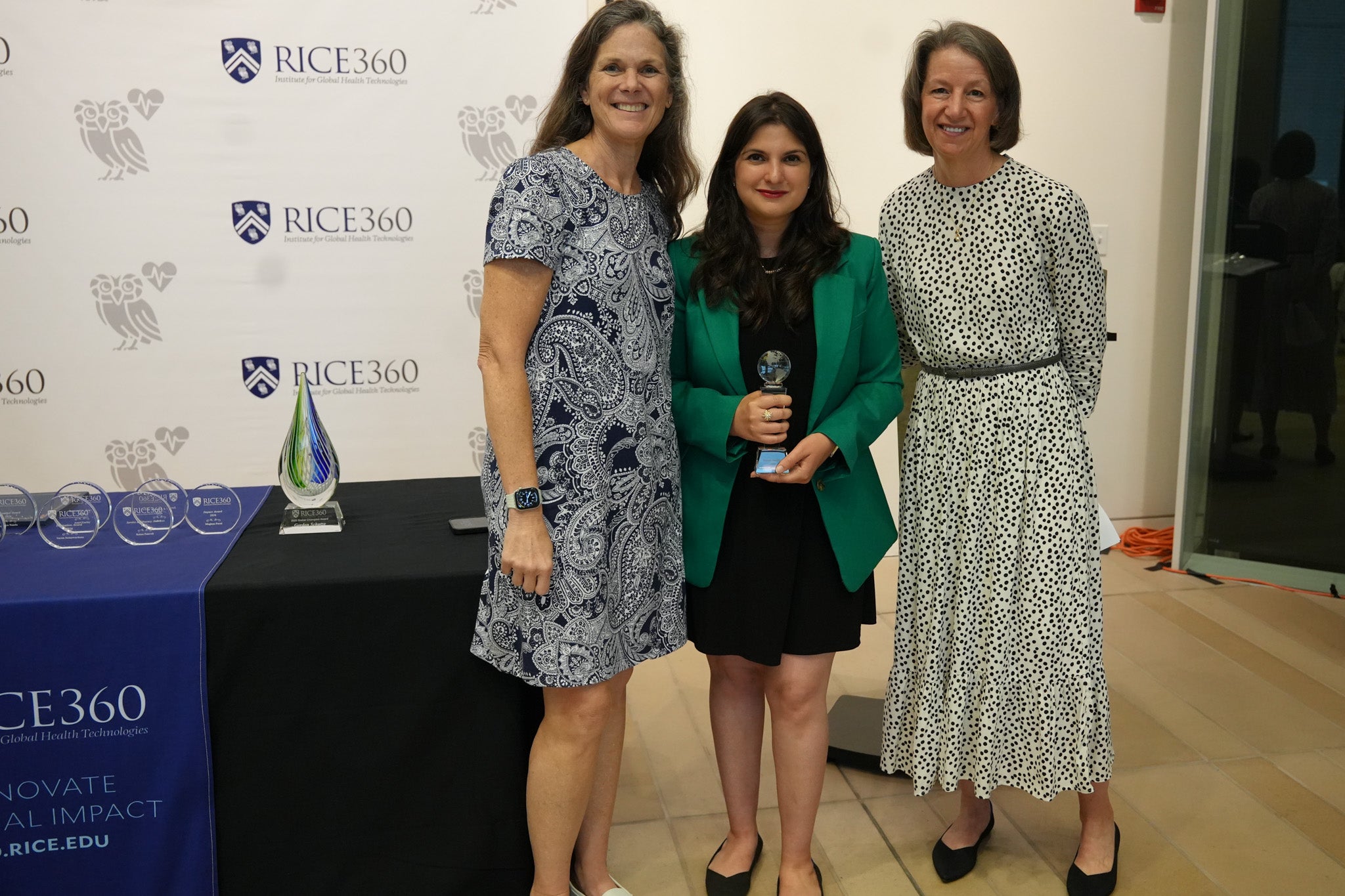
Roxana Daneshjou graduated from Rice University in 2009 with a Major in Bioengineering. Daneshjou shares insights from her time as a student in the early Beyond Traditional Borders program days, what is now Rice360 Institute for Global Health Technologies. She shares how her hands-on experiences in the Rice360 (IGHT) program have shaped her since graduating from Rice University.
What led you to get involved with Rice360 (IGHT) as a student?
Joining Rice360 (IGHT) (then called Beyond Traditional Borders) was a foundational experience during my undergraduate studies at Rice University. I was drawn to the newly launched Global Health Technologies minor because it offered an exciting opportunity to bridge two of my lifelong interests, engineering and medicine.
The people-focused application of my engineering skills was an especially rewarding aspect of the program. As students, we were tasked with designing low-cost medical tools to bridge gaps in healthcare access for patients in low-resource settings.
I enjoyed the collaborative creativity in the program, which led to more effective designs with potential for global impact. Having this opportunity as a Rice undergraduate was so cool and a highlight of my time at Rice.
Could you share some of the projects you worked on as a student in the institute's early days?
One of the projects that I worked on was the Lab in a Backpack project. Of course, many, many people worked on that, but that project was a defining experience. When I joined the project team, a lot had already been developed, and we were creating a newer version with improvements.
Our team worked to refine the design of the backpack, including the addition of a battery-powered microscope with a solar charger. In the low-resource settings where the backpack would be used, a microscope with a reusable power source would be a big advantage during a power outage or blackout. At that time, the Oshman Engineering Design Kitchen maker space did not exist, so my group and I were huddled in some random room on campus, assembling the backpack, developing options for the microscope, and discussing its contents and how to improve it.
My favorite memories as a student always centered around working with people—all the other students, learning from the faculty, and collaborating with physicians in Malawi. Rice pushed us to develop a strong community. Being part of the early days of Rice360 (IGHT) gave me a sense of community, and I remember it as one of the best experiences during my undergraduate studies.
How did your experience as a Rice360 (IGHT) student prepare you for your current career?
Rice360 (IGHT) is unique in teaching strong collaboration skills alongside engineering. My career now involves developing solutions to problems in medicine, and in some ways, I still use engineering concepts. After graduating from Rice, I immediately went to Stanford to earn my MD, driven by my desire to work with patients, help people, and understand the problems in medicine so I could build solutions. I ended up switching to an MD-PhD because I missed the research-focused engineering.
During my residency, I became interested in building tools to solve medical problems using Artificial Intelligence (AI). I pursued a postdoc in AI when AI research in medicine was perhaps a little more esoteric. AI research has since taken off. Now I run a research lab at Stanford, and we’re doing some engineering projects to build skin imaging devices for use in lower-resource medical settings in the U.S., so the engineering skills I developed with Rice360 (IGHT) have come back into play.
I am also involved in venture capital through a program called Tree Hub. Understanding engineering principles, such as identifying problems or needs for companies to address, is a key part of my work at Tree Hub. Also, some of the companies we work with build solutions for low-resource settings, which ties back to the foundation I received from Rice360 (IGHT).
What would you say is the most rewarding part of your work?
One of the most rewarding parts of my work remains collaborating with people, especially brilliant minds who think creatively and approach the world with unique perspectives. I especially enjoy working with people from diverse backgrounds who bring different perspectives shaped by their lived experiences. That collaboration is the best part of my job and something I carried forward from my time at Rice University and hands-on courses at Rice360 (IGHT).
What advice would you give to current students or recent graduates looking to enter the global health field or just healthcare in general?
My career might look like a very neat package, but there was definitely a lot of time spent discovering what I wanted to do and the contributions I could make. I didn’t start my post-baccalaureate journey as an MD-PhD student. I was an MD-only student who later transferred into an MD-PhD program. Now, I run a lab that researches AI and its application in medicine. I would tell students that no career is neatly packaged and life is not a straight course. There are setbacks and discoveries. You follow your passions and find a new course. From my perspective, it is important to care deeply about what you are doing, put in your best effort, and leave yourself open to how things will turn out. If you keep doing what you love and remain open to discovery, you can have a very satisfying career.